By Spalls Waste Management Editorial Team · Updated 2026-08-05
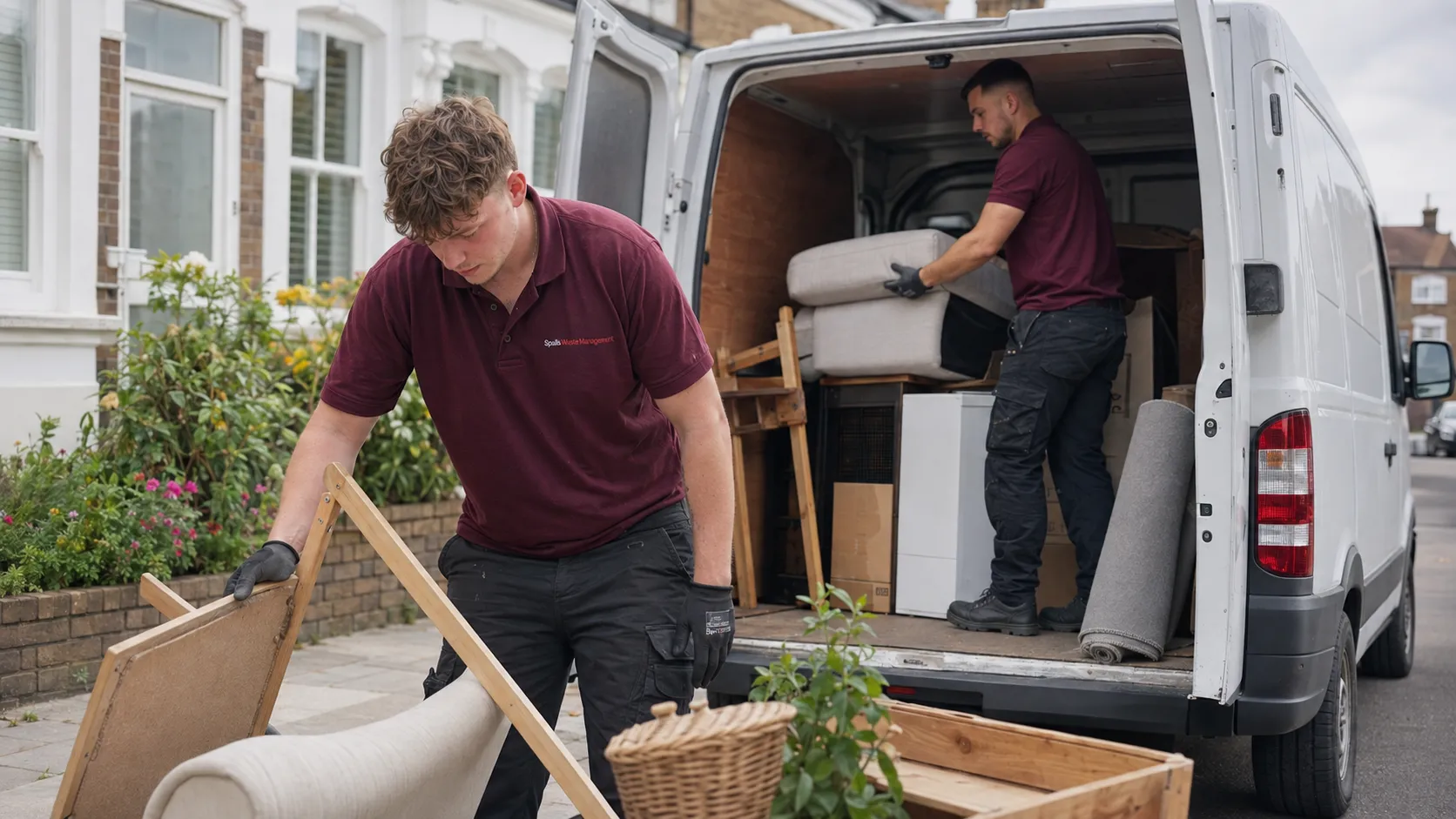
Choosing a provider for rubbish removal near me starts with three practical checks: confirm what the company can collect, check that it is authorised to carry waste, and obtain a clear quotation for the full job. You should also compare response times, ask what documentation will be supplied and explain any access restrictions before booking.
Spalls Waste Management is a family-run waste management company serving homes and businesses across London, Essex and surrounding areas. Established in 1982, we operate 24 hours a day and offer a rapid 2–4 hour response. Our work includes fly-tipping removal, hoarders clearances, squat clearances, bin store bulk removals, post-construction waste removal and bio-hazard waste collection.
Key Takeaways
- Check the provider on the Environment Agency public register before handing over waste.
- Describe the waste, volume, access and timing accurately so the quotation reflects the real job.
- Ask what paperwork applies. Businesses generally need suitable waste transfer information, while different rules apply to householders.
- Compare the complete service, including labour, loading, transport, disposal and any cleaning required afterwards.
- Choose a provider that clearly confirms its service area, availability and response time.
What Should You Know Before Searching for Rubbish Removal Near Me?
Before contacting a provider, make a simple inventory. Note whether the load contains furniture, bagged household items, garden waste, construction debris, electrical items or anything potentially hazardous. Photographs can help the company understand the volume, vehicle requirements and number of operatives needed.
This preparation matters because a general household clearance is different from an estate cleanout, and both require a different plan from an office cleanout. The size of the load, the material involved and the route from the property to the vehicle all affect how the work should be organised.
Tell the provider about:
- The type and approximate quantity of waste
- The floor level and whether a lift is available
- Parking, loading or access restrictions
- Heavy or awkward items
- Any appliances requiring separate handling
- Suspected bio-hazardous or hazardous material
- Whether the service is urgent or can be scheduled
- Whether the area needs to be sanitised after removal
If you are comparing a cleanout after a move, bereavement or property handover, explain which rooms, garages, sheds or communal areas are included. A well-defined cleanout reduces the likelihood of omitted items or a revised quotation on arrival.
How Do You Check Whether a Waste Provider Is Legitimate?
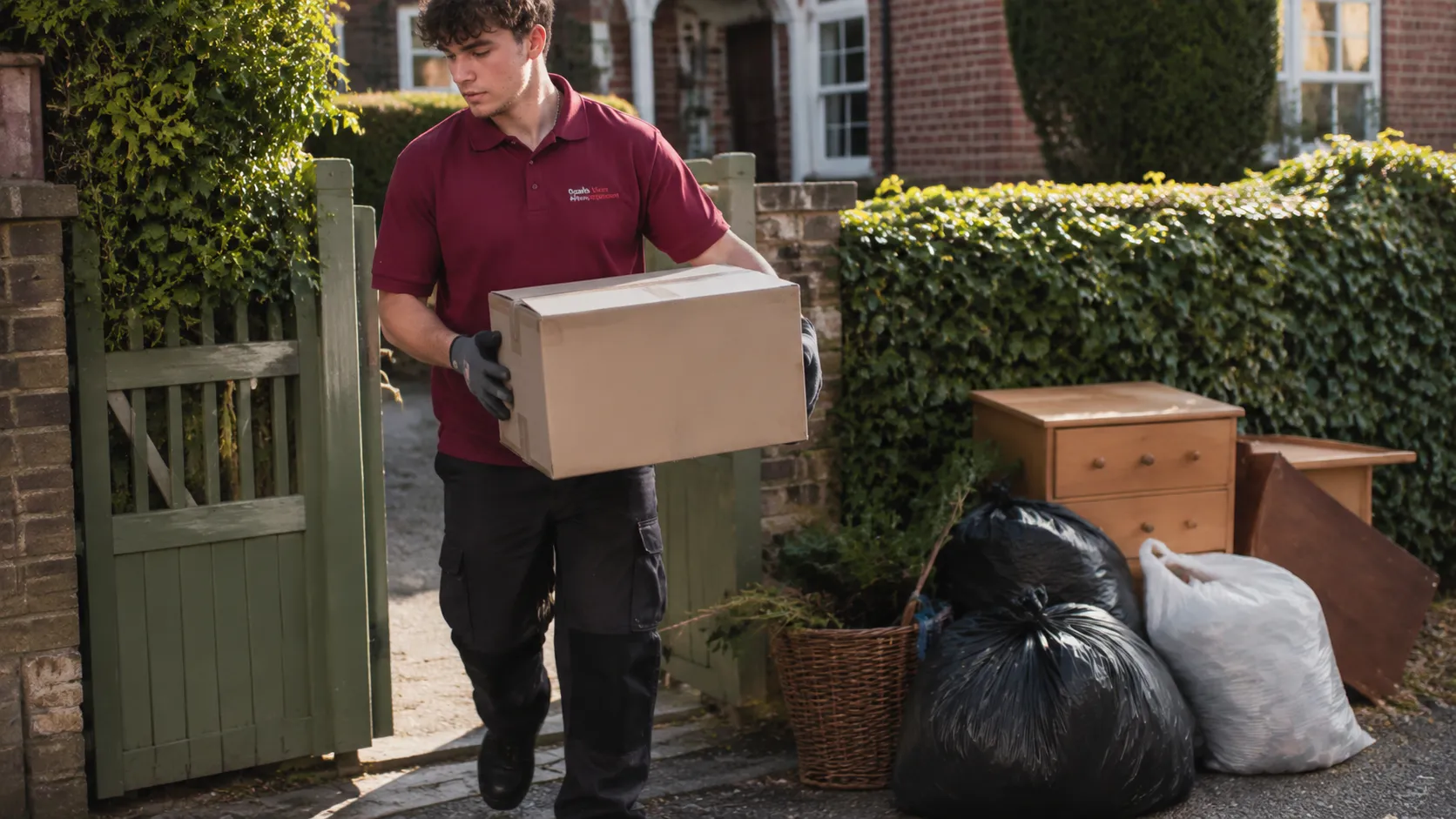
In England, businesses that transport waste as part of their operations generally need to appear on the Environment Agency register. You can search by business name, registration number or postcode. The government guidance on waste carriers, brokers and dealers explains who must register and how the system works.
Householders also have a duty to take reasonable measures to ensure their waste is passed to an authorised person. The government’s waste duty of care code of practice recommends checking a carrier’s authorisation before using a private waste business.
Ask the provider for:
- Its registered business name
- Its waste carrier registration details
- A written quotation describing the work
- Confirmation of where the waste will be taken
- A receipt or other record of the collection
- The appropriate waste transfer documentation for business waste
Non-hazardous business waste transfers require a written description containing the necessary information. The Environment Agency provides a waste transfer note template, although alternative documentation may be used if it contains all required details. Hazardous waste is subject to different controls and normally requires a consignment note, so identify suspected hazardous materials before booking.
Which Type of Removal Service Fits the Job?
Search results often use overlapping phrases for similar work. A provider may describe household clearance as rubbish removal, waste clearance or junk removal. The label matters less than the confirmed scope, lawful handling and written price.
People may search junk removal in my area when they need furniture, boxes and mixed clutter removed. Others may search for a local junk removal service or compare local junk removal companies. Whichever wording you use, check that the provider confirms the accepted materials rather than assuming every load is covered.
An estate cleanout may involve several rooms, stored possessions, lofts, garages and outbuildings. A careful estate cleanout should be planned sensitively, with clear decisions about what will be removed and what must remain. For a larger clearance, photographs or a site assessment can make the quotation more accurate.
An office cleanout can include desks, chairs, filing, shelving, packaging and electronic equipment. Before an office cleanout, separate confidential records and identify items that may fall under electrical waste controls. A staged clearance may be useful where the business must remain operational.
For shops, offices, managing agents and other organisations, commercial waste collection may be required as a scheduled arrangement rather than a one-off clearance. Ask whether the provider’s commercial services cover the waste stream, collection frequency and documentation your site requires. Some commercial services focus on recurring collections, while others specialise in reactive or bulky clearances.
How Should You Compare Rubbish Removal Quotes?
A low headline price is not useful if essential parts of the job are excluded. Ask each provider to state whether the quotation includes labour, loading, transport, disposal charges and any agreed sanitisation. Confirm whether extra charges could apply for difficult access, unusually heavy items or a larger load than originally described.
When comparing junk removal, use the same inventory and photographs for every company. This gives each provider the same information and makes the responses easier to assess. A responsible junk removal quotation should identify any items that cannot be taken or require specialist handling.
Online searches can use American wording even when the service is needed in the UK. Phrases such as trash pickup in my area, garbage collection in my area, garbage pick up in my area and bulk pick up in my area may all produce clearance results. Likewise, trash pickup services in my area, junk removal services in my area and rubbish collection in my area can lead to providers offering different scopes. Read the service description carefully and confirm that the company covers your postcode.
Ask these questions before accepting a quote:
- What items and areas are included?
- Is loading and transport included?
- Are disposal charges included?
- Will the provider supply the relevant paperwork?
- When can the team attend?
- What happens if the load is larger than described?
- Is any cleaning or sanitisation included?
- Are restricted or hazardous items excluded?
What Should You Ask About Garden Waste and Leaves?
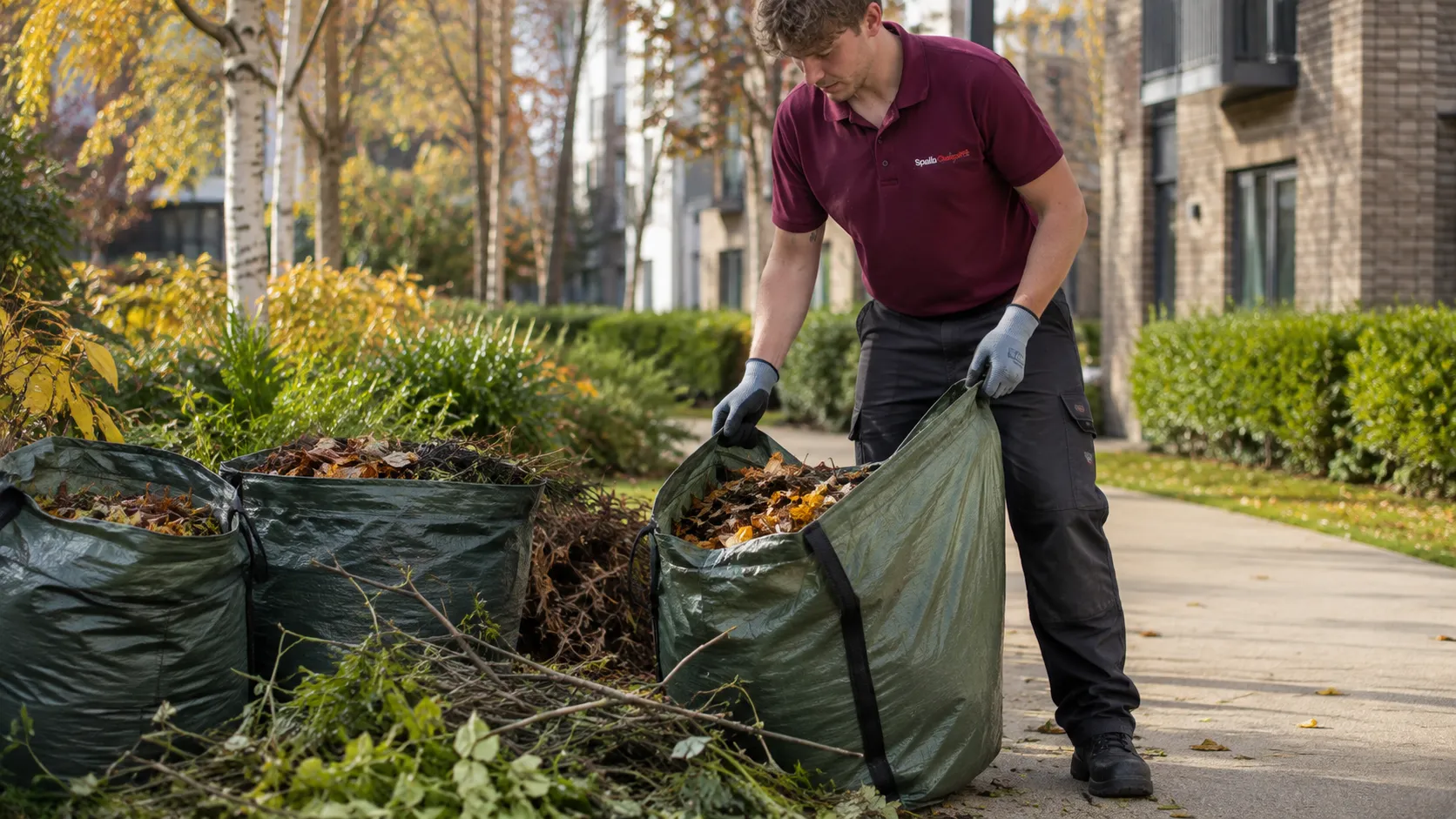
Garden clearance needs a clear description because wet material can be much heavier than it looks. Tell the provider whether the load includes branches, soil, turf, grass clippings, plants, pots or leaves. Fresh leaves may be light, while wet leaves can be dense and awkward to move. Bagged leaves are usually easier to assess than loose leaves spread across a garden.
Before the quotation, estimate how many bags of leaves are present. Explain whether the leaves are dry leaves, wet leaves or leaves mixed with soil. If leaves are under hedges, behind sheds or on steps, mention the access. If leaves have collected in drains, do not assume drain clearance is included. If leaves are mixed with litter, plastics or stones, say so because mixed leaves may need sorting.
The season can also affect the volume. Autumn leaves may accumulate quickly, and a garden that looks clear one day may have more leaves after wind or rain. If new leaves are likely to fall before collection, tell the provider. A photograph of the leaves beside a bin or bag gives useful scale. For larger piles of leaves, include photographs from more than one angle.
Preparation can make removal easier. Keep leaves separate from general rubbish where practical. Do not hide broken glass, sharp metal or animal waste beneath leaves. Avoid overfilling weak bags with wet leaves. If the leaves contain grass clippings, state that clearly. Grass clippings can retain moisture, and grass clippings mixed with leaves may weigh more than dry leaves alone.
You should also explain where the leaves came from. Leaves from routine garden work are different from leaves mixed into post-construction debris. Leaves beside a driveway may contain grit, while leaves from a lawn may contain soil. Leaves from communal grounds may require a different collection plan from leaves at one home.
For an accurate quote, tell the company whether operatives must gather the leaves or only collect prepared bags. Gathering leaves takes additional time. Collecting leaves from several areas may also require more labour than removing leaves stacked beside the access point. If a gate is narrow or steps separate the leaves from the vehicle, mention this before booking.
A provider should be able to explain whether it accepts loose leaves, bagged leaves and leaves mixed with other garden waste. It should also confirm whether grass clippings, branches and soil can travel in the same load. Do not assume appliances or household furniture can be added to a garden collection without agreement.
When comparing quotations, ask whether leaves must be bagged, whether leaves can be damp, whether leaves mixed with soil are accepted, whether leaves are collected from the ground and whether leaves must be placed by the entrance. Also confirm whether leaves from communal gardens, leaves from commercial grounds, leaves around parked vehicles, leaves near drains and leaves in restricted-access areas require a site visit. Photographs of leaves help the provider assess the work.
If you arrange repeat garden clearance, agree who gathers the leaves and when the leaves should be ready. Confirm what happens if the volume of leaves changes between visits. A recurring plan can be useful where leaves build up across shared grounds, but the scope should remain clear.
The main point is simple: describe leaves honestly, separate leaves from unsuitable material where possible and show the scale of the leaves in photographs. This helps the provider plan for the leaves, price the leaves and remove the leaves safely without surprises.
What Warning Signs Should You Avoid?
Be cautious if a provider refuses to give its business details, cannot explain how it is authorised to carry waste or offers no written description of the job. A vague cash-only offer with no receipt gives you little evidence of who took the waste or what was agreed.
Other warning signs include:
- An unusually low quote with no explanation of disposal costs
- Pressure to book without checking the load
- No questions about restricted or hazardous materials
- Refusal to confirm where the waste will be taken
- No clear process if the quantity differs on arrival
- Promises that every material can be collected without assessment
Good junk removal is not simply about making unwanted items disappear. It involves identifying the load, planning safe access, using the right vehicle and transferring waste through authorised routes. That accountability matters for a one-room cleanout as much as it does for a whole commercial property.
Why Consider Spalls Waste Management?
Spalls Waste Management has provided waste management services since 1982. We are family-run, operate 24/7 and offer a rapid 2–4 hour response across London, Essex and surrounding areas. You can learn more about our background on our About page.
Our waste removal services include fly-tipping removal, hoarders clearances, squat clearances, bin store bulk removals, post-construction waste removal and bio-hazard waste collection. We approach sensitive clearances with care and provide documentation for our removal and disposal work.
If you need junk removal for a home, managed property or business premises, our team can discuss the waste type, access and timing before providing a quotation. For Chelmsford-specific guidance, see our article on rubbish clearance in Chelmsford.
The right junk removal provider should make the scope, price and disposal route clear before the collection begins.
To discuss rubbish removal near me, submit the details through our request a quote page or contact Spalls Waste Management. Include photographs where possible and flag hazardous or restricted materials at the outset.
FAQ
How do I choose the best rubbish removal near me?
Check that the provider is authorised to carry waste, confirms which materials it accepts and supplies a written quotation. Compare the full scope, not only the headline price, and ask what documentation will be provided.
What information should I provide for junk removal?
Share photographs, an item list, the collection address, access details and your preferred timing. Identify heavy items, electrical goods and any potentially hazardous material before the team attends.
What is included in a property clearance?
It depends on the agreed quotation. Confirm which rooms, storage areas, garages, outbuildings and external spaces are included, as well as whether loading, disposal and sanitisation form part of the work.
Can Spalls Waste Management respond urgently?
Yes. We operate 24 hours a day and advertise a rapid 2–4 hour response across London, Essex and surrounding areas.
Does Spalls Waste Management handle hazardous waste?
Our published services include bio-hazard waste collection. Tell us about the material before booking so the job can be assessed and the appropriate handling and documentation confirmed.
Should a business receive a waste transfer note?
Non-hazardous business waste transfers require appropriate written waste information. A waste transfer note is one way to record it, although other documentation may be used if it contains all the required details. Hazardous waste movements normally use consignment notes instead.
